Mix Blox
Gimica GmbHPuzzle
4.53.87K Reviews
- Version
- 1.10.0
- Installs
- 1.00M
- Age Rating
- Everyone
Screenshots
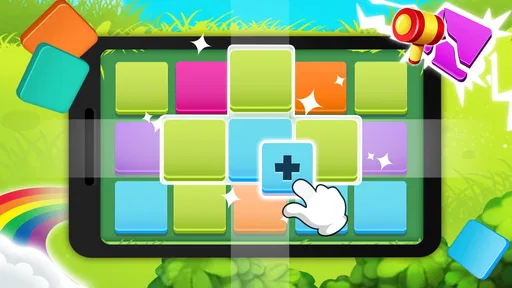
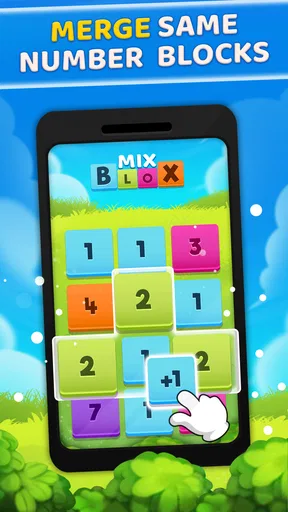
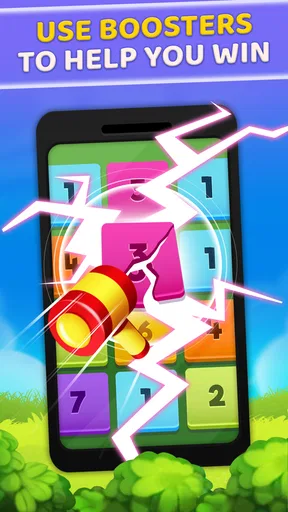

Our Review of Mix Blox
 Analysis by Appyee
I spent time with Mix Blox, a free puzzle game from Gimica GmbH built around combining blocks that carry the same number. That sounds simple, and the first few moves are simple, but the appeal comes from deciding when to merge, where to leave space, and how long I can keep a clean board before a harmless-looking move creates trouble. It is the kind of game I can open for a short break without learning a complicated ruleset first.
The game belongs to the casual puzzle side of mobile gaming, and its Everyone age rating makes it an easy recommendation for players who want something approachable rather than intense or story-heavy. It has reached over a million installs and holds a 4.5 average from around 58 thousand ratings, which fits my impression: this is designed as an immediately understandable time-filler, not as a demanding strategy simulator.
How the first goals shape the experience
The central task is clear from the beginning: find matching numbered blocks and merge them. I like that the objective is visible rather than hidden behind a long tutorial or a series of menus. I can look at the board, identify a useful pair, and start making decisions almost immediately. That low entry barrier is one of the strongest reasons to try it.
Early play is less about mastering a deep system and more about learning to read the board. A matching pair is not automatically the best move. If I merge too quickly, I may create a new number in an awkward position or use up a space that would have helped with a later combination. The first meaningful goal, therefore, is not simply to merge as often as possible. It is to keep future merges available.
That distinction gives the opening moments more substance than the short description suggests. I found myself checking the surrounding blocks before committing, especially when several possible matches were visible. A quick move can feel satisfying, but a slightly slower choice often leaves the board easier to manage. This is a useful habit for new players: scan the whole layout first, then choose the merge that preserves the most options.
The game works particularly well in everyday situations where attention comes in small pieces. I can play while waiting for a drink, during a short commute break, or when I want something more interactive than scrolling. Because the basic rule is so easy to remember, I do not need to reconstruct a complicated objective after leaving the game for a while.
At the same time, players looking for a strong narrative, character development, or a long-term adventure goal should adjust their expectations. The motivation here comes from the board itself and from trying to make better decisions, not from an unfolding story. If your ideal puzzle game gives you chapters, dialogue, or elaborate missions, this will feel deliberately stripped back.
What counts as progress during a session
Mix Blox does not need a large set of visible rewards to make each move understandable. The board provides its own feedback: matching pieces disappear into a new result, the available space changes, and the next decision becomes clearer or more dangerous. I found this immediate response more important than a decorative reward because it tells me whether my previous choice improved the position.
The most useful progress signal is the changing quality of the board. A tidy layout with several possible pairs feels healthy. A crowded arrangement with isolated numbers feels fragile. Once I started treating open space as a resource rather than empty background, the game became more deliberate. That is one of the less obvious lessons in this puzzle: a move can be valuable even when it does not produce the largest visible merge, provided it keeps the board flexible.
For practical play, I recommend watching for clusters instead of focusing on one attractive pair. If two blocks can merge but doing so separates the rest of the board, I usually prefer a move that keeps related numbers closer together. This is not a formal strategy guide or a guaranteed solution, but it makes the board easier to read and reduces the chance of running out of useful choices prematurely.
Another helpful approach is to pause briefly after every major merge. The new arrangement can change which numbers are now compatible, and acting immediately can mean overlooking a better sequence. The game is fast enough to encourage automatic tapping, so deliberately adding that short inspection step improves the experience for me. It turns the session from reflexive matching into a small planning exercise.
These progress signals are subtle, which is both a strength and a limitation. Experienced puzzle players may appreciate the clean focus on the board. New players who expect frequent unlock screens, badges, or clearly named milestones may find the sense of advancement less obvious. The satisfaction is mainly local and strategic: I see a better position, a larger merge, or a longer-lasting run.
Difficulty and pacing: where the calm starts to tighten
The opening is welcoming because the rules require almost no explanation. The challenge grows from the consequences of each placement rather than from a sudden rule change. As the board becomes less forgiving, I have to think about the order of moves, not just whether a match exists. That creates a natural difficulty curve without making the game feel inaccessible at the start.
What I enjoy most is the gradual shift from recognition to planning. At first I search for obvious identical numbers. Later I consider which merge will create the most useful shape and which area of the board should remain open. The same basic action therefore feels different as my understanding improves. The challenge comes from arranging opportunities, not from memorizing a large rulebook.
The pacing is best when I want a compact mental workout. A session can begin casually, then become unexpectedly absorbing once the board reaches a crowded state. I often intend to make one or two moves and end up staying longer because the next merge looks possible. That pull is not based on dramatic events; it comes from being close to rescuing a difficult layout.
There is also a trade-off here. The simple structure means the game can feel repetitive if I play for a long uninterrupted stretch. The action remains focused on numbered blocks and merging, so players who need frequent changes of scenery may lose interest. I consider it better suited to repeated short sessions than to a long evening of continuous play.
When the board becomes difficult, patience matters more than speed. I try not to spend every available opportunity immediately. Keeping a useful pair intact can be wiser than merging it at once, particularly when the resulting block would occupy a valuable position. This is a concrete difference from many match-style puzzles, where clearing a match as soon as possible is usually the safest instinct.
Compared with a traditional match-three game, Mix Blox feels more spatial and less event-driven. There is no need to chase a chain reaction simply because it is available; the important question is how the merge affects the next few decisions. Compared with a classic number-combining puzzle, it offers a more direct, block-focused presentation. Players who prefer calm board management may enjoy that middle ground, while those who want power-ups, timed stages, or elaborate objectives may find it too restrained.
What keeps me returning, and what may push me away
The strongest retention hook is the unfinished board. When I leave a session with a promising arrangement or a difficult position, I want to return and see whether I can manage it better. The game also benefits from the universal appeal of a rule that can be explained in one sentence. I can recommend it to someone who rarely plays mobile games without worrying that they will need a long introduction.
Its free price makes trying it easy, while optional in-app purchases range from $0.99 to $3.49 per item. I would approach those purchases thoughtfully. The core appeal is the act of planning merges, so spending money should only feel worthwhile if it addresses a specific convenience you personally value. I would not install it expecting a paid-style campaign with a fixed endpoint; its value is in the repeatable puzzle loop.
The game’s broad accessibility is another reason it works as a shared recommendation. The Everyone rating and straightforward controls make it suitable for casual family play, although people with very different puzzle preferences may enjoy it for different reasons. One player might like spotting immediate matches, while another may focus on preserving space and building a more stable board.
Still, the same accessibility can become a weakness for demanding players. If you want a clearly announced ladder of goals, a rich unlock structure, or a sharply escalating challenge, the experience may not provide enough visible direction. I also would not choose it as my main game when I want social competition or a strong sense of narrative progression. Its retention pressure is quiet: it asks me to beat my own decision-making rather than constantly presenting a new spectacle.
Another practical consideration is device compatibility. The game requires Android 7.0 or later, so anyone using an older Android phone should check that requirement before planning a download. On a supported device, the current version is 1.10.0, which identifies the release I reviewed without changing the basic character of the experience: simple rules, numbered blocks, and increasing pressure from the board.
Who should play it and who should skip it
I would recommend Mix Blox to someone who wants a free puzzle game that can be understood instantly but still rewards careful choices. It is especially suitable for short breaks, quiet waiting time, and players who enjoy making order out of a crowded layout. It also works for people who like number-based puzzles but do not want a complicated interface or a story to follow.
I would be more cautious recommending it to players who need constant novelty. If your favorite mobile puzzles rely on animated effects, dozens of boosters, timed challenges, or a large collection of themed levels, this may feel too narrow. The game’s identity depends on repeating and refining one central activity, so its success depends heavily on whether that activity remains satisfying for you.
For a new player, my advice is to treat empty spaces as future possibilities. Do not judge a move only by the number it creates. Ask whether it leaves room for another pair, keeps similar blocks near one another, and avoids placing a valuable result where it will be difficult to use. That small change in perspective makes the game feel more strategic without adding complexity.
I also suggest playing in short focused bursts rather than tapping while distracted. Because the board can punish a careless decision several moves later, half-attention is more damaging here than in a purely reflex-based game. If I am tired or rushing, I tend to merge the first obvious pair and lose the structure I had been building. A slower pace usually produces a more enjoyable session.
My progression verdict
After spending time with it, I see Mix Blox as a compact puzzle built around gradual personal improvement. Its early goals are clear, its progress is communicated through the changing board, and its difficulty comes from managing space and timing rather than from piling on new rules. That gives the game a coherent rhythm: easy to start, increasingly thoughtful to sustain, and best enjoyed in repeat visits.
The progression is not especially elaborate, and that is important to understand before installing it. The game does not replace a full campaign or a feature-rich match puzzler. Instead, it offers a focused loop that can fill a few minutes while still giving me something to think about. The lack of variety may limit long sessions, but it also keeps the experience approachable and uncluttered.
My final recommendation is positive for casual puzzle fans who enjoy numbered blocks, spatial planning, and the satisfaction of saving a board that initially looks awkward. The best reason to try it is not the promise of a huge content journey; it is the clean moment-to-moment decision-making. If you enjoy puzzles where one careless move can close several future options, this is a pleasantly focused choice.
For me, the game succeeds when I want a low-pressure challenge with enough depth to reward attention. It is free to start, available for a wide range of players, and easy to explain to a friend. I would skip it only if I needed rich progression systems or constant variation. Otherwise, Gimica GmbH has made a modest but effective puzzle experience—one that earns another session by making the next merge feel just possible.
Verdict
Strengths of Mix Blox
- Simple drag-and-drop controls are easy to learn.
- Short rounds make it suitable for quick breaks.
- Bright block designs make the board easy to read.
- Works well for players who enjoy relaxed puzzle sessions.
- Progressive challenges can keep casual players engaged.
Limitations of Mix Blox
- Limited gameplay variety may feel repetitive over time.
- Some levels can become frustrating without clear strategy hints.
- Small screens may make precise block placement difficult.
- Frequent interruptions can affect the flow of a puzzle session.
- Replay value may depend heavily on personal interest in score chasing.
Other Releases by Gimica GmbH
View All


Similar Picks in This Category
View All
Block Blast!
HungryStudio4.8

Braindom: Brain Games Test
Lahana Game Studio4.6

AMAZE!
CrazyLabs LTD4.6

Sudoku - Classic Sudoku Puzzle
Oakever Games4.7

Art Puzzle - Puzzle Games
Easybrain4.8

Amaze GO!
Oakever Games4.9
Frequently Asked Questions
What is Mix Blox and how does the game work?
Mix Blox is a casual block puzzle game focused on arranging and combining colorful pieces on a grid. During testing, the gameplay was easy to understand: you place available blocks, complete lines or matching patterns, and try to keep the board from filling up. Its simple controls make it suitable for short sessions, while the increasing challenge encourages more careful planning as you progress.
Is Mix Blox free to download and play?
Mix Blox can generally be downloaded for free, allowing players to try the core puzzle experience without an upfront payment. However, availability of advertisements, optional purchases, extra lives, boosters, or other paid features may depend on the version and platform. Before downloading, check the store listing for current in-app purchase details so you know which content is included at no cost.
Does Mix Blox require an internet connection?
The basic block-placement gameplay appears suitable for playing without a constant internet connection, which is convenient when traveling or when mobile data is limited. Nevertheless, an internet connection may be required for advertisements, cloud features, account synchronization, updates, leaderboards, or in-app purchases. Offline functionality can vary between Android and iOS versions, so it is worth checking the latest store information.
Is Mix Blox suitable for children and beginners?
Mix Blox is approachable for beginners because it uses straightforward touch controls and does not require previous puzzle-game experience. The colorful presentation and short rounds can also appeal to younger players. Parents should still review the app’s age rating, advertising policy, and possible in-app purchases, since these details may vary by device, region, and the version currently available in the official app store.
Are there ads or in-app purchases in Mix Blox?
The free version of Mix Blox may include advertising and optional purchases, as is common with casual mobile puzzle games. Ads can appear between rounds or when players choose to receive rewards, while purchases may offer boosters, extra attempts, or an ad-free experience. The exact options can change after updates, so review the payment information and permissions shown before installing.
Play our best games!


